Spinning Out of Control The Real Cost of Vinyl in the UK in 2026
Let's break down the figures from 2025 to 2026 to see exactly what has happened to vinyl prices in the UK, the major trends driving them, and what it means for your collection.

› Some links in this post are affiliate links, which means we earn a small commission if you like and buy our recommendations. This comes at no additional cost to you and supports Vovyl.
If you’ve been flicking through the racks at your local independent record shop recently, you’ve probably noticed: our favourite hobby isn't getting any cheaper. As we settle into 2026, the vinyl revival in the UK is still spinning at full speed. The British Phonographic Industry (BPI) continues to report impressive year-on-year sales growth for the format. Yet, the cost of participating in this analogue renaissance has undeniably shifted over the last couple of years.
Let's break down the figures from 2025 to 2026 to see exactly what has happened to vinyl prices in the UK, the major trends driving them, and what it means for your collection.
The Price Shift: A Steady Climb
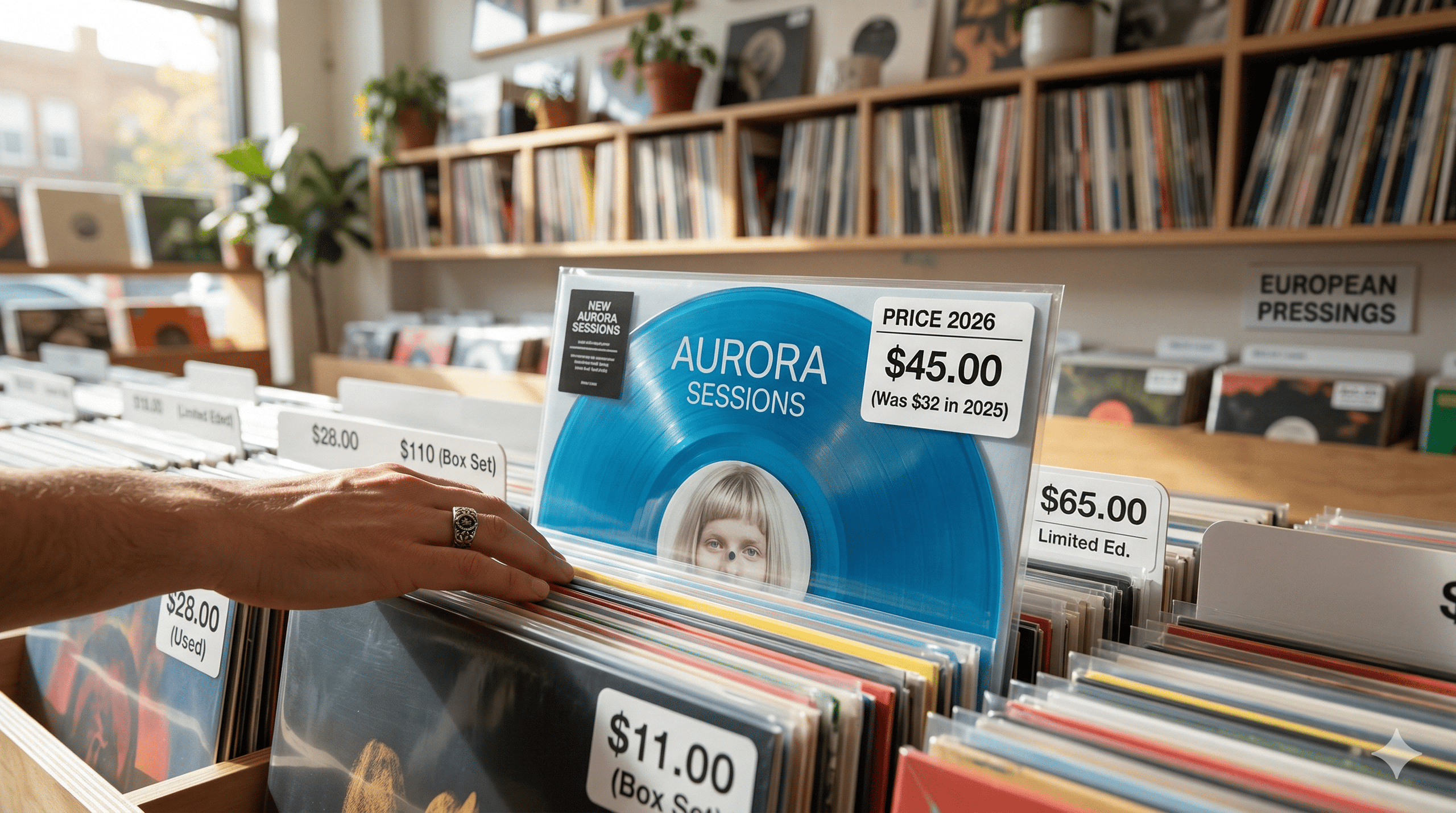
Contrary to wild internet rumours of sudden price explosions, the UK market has primarily seen a slow, steady climb that has compounded over the last five years. The days of reliably picking up a brand-new release for £15 to £18 are definitively behind us. However, the extreme spikes for standard releases haven't entirely taken over either.
Here is a realistic overview of high street prices for new vinyl in the UK from 2025 to 2026:
| Vinyl Category | Average Price (2025) | Average Price (2026) | General Trend |
| Standard New Release (1 LP, UK Indie) | £22 - £26 | £25 - £30 | 📈 Slight increase |
| Major International Release (Pop/Rock, often 2LP) | £32 - £38 | £35 - £42 | 📈 The new normal |
| Deluxe Editions / Special Pressings (Colour, Remasters) | £35 - £45 | £40 - £50+ | 📈 Premium segment |
As the data shows, there wasn't a massive 30% jump in a single year, but the baseline price in 2026 has simply nudged up by a few quid. A standard single LP sitting at £25 to £28 is now completely accepted as the standard by consumers.
Why Are We Paying More at the Till
The persistently high prices in the UK are a mix of local and global factors that have structurally increased costs:
- The "Premiumisation" by Megastars: The biggest price drivers are often international pop and rock stars, as well as massive UK acts like Arctic Monkeys or Harry Styles. They increasingly release their new albums as double LPs or in multiple, highly marketed coloured variants. This pulls the average high street price firmly upwards.
- Production and Energy Costs: Even though the UK is home to some fantastic pressing plants, they are not immune to rising overheads. The high cost of energy in the UK (record presses require massive amounts of steam and heat), more expensive PVC pellets, and rising wage costs all hit the manufacturing baseline directly.
- Brexit, Imports, and VAT: This remains a massive factor. For releases pressed outside the UK (such as in EU plants like Optimal or MPO, or US imports), distributors are still dealing with post-Brexit customs friction, extra logistical costs, and import duties. Add the standard 20% UK VAT on top of the retail price, and it becomes clear why records feel so much more expensive by the time they reach the shop floor.
"The UK vinyl market has matured. The continued strong sales figures prove that British music fans cherish the physical format, even now that the entry price for a new record has firmly established itself around the £25 to £30 mark."
The Verdict: Quality Over Quantity
The trend for 2026 is clear: vinyl remains incredibly popular in the UK, but buying records has become a genuine luxury expense.
For the average collector, this means the days of blindly walking out with a stack of new releases every Friday are over. Collectors are becoming more selective. Instead of buying everything, we are seeing a shift towards targeted curation. Vinyl buyers prefer to invest their budget in albums they truly want to play from start to finish, supporting their favourite local independent artists, or buying high-quality audiophile pressings that are built to last a lifetime.